12 August
Saudi Arabia’s transportation and logistics sector is experiencing rapid transformation, driven by the rising demand for digital logistics solutions. According to Statista, the market is poised for significant growth—fueled by the surge in e-commerce adoption and continued investment in infrastructure development.
As this shift accelerates, businesses are increasingly seeking custom e-commerce solutions to streamline operations, improve delivery efficiency, and stay competitive in a digitally evolving landscape. Explore
According to predictions, sales of delivery apps in Saudi Arabia will rise from $8.33 billion in 2025 to $17.05 billion in 2030. Because of this, now is the ideal moment for companies to invest in a transportation app in Saudi Arabia.
By developing a logistics app similar to Aramex, businesses of all sizes can enter a high-potential market with contemporary delivery demands. This blog will cover the idea, how to build a transportation app like Aramex in Saudi Arabia, salient features, and the Cost to develop a logistics app in Saudi Arabia.
Aramex, one of the best international logistics companies, has successfully updated its delivery processes across the MENA region. People know Aramex for its easy-to-use mobile app, which lets users pay safely, keep track of deliveries, and track shipments in real time.
Aramex is an excellent example for Saudi entrepreneurs who want to make a transportation app that works well in the local market because it has a strong brand and a smooth mobile experience. The app is a central place for consumers, e-commerce companies, and retailers who want to improve their delivery processes.
Vision 2030 is opening up new markets for tech-based logistics solutions. As more people use smartphones and shop online, the need for fast, reliable, and trackable delivery services is growing.
Making a transportation app like Aramex in Saudi Arabia meets both the needs of customers and the country’s own goals. Mobile platforms that make operations more efficient have become essential tools for couriers and delivery companies of all sizes.
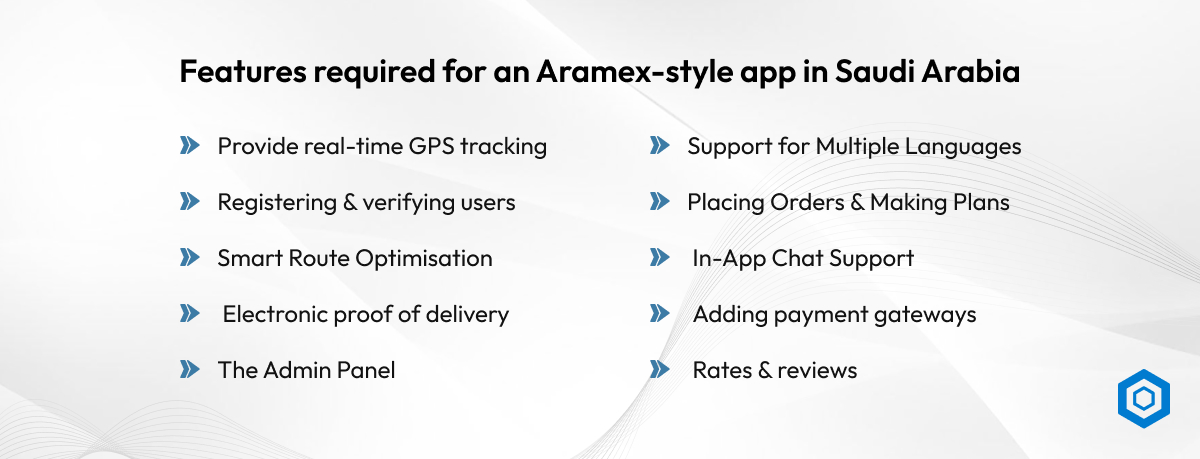
Aramex is a logistics app that must do more than just track and deliver. It should ensure seamless communication at all logistics touchpoints, boost customer satisfaction, and expedite fleet operations.
Real-time GPS allows users to check the driver’s location and delivery status instantly. Customers’ trust is increased, and transparency is improved. Logistics managers can also use it to improve route planning and cut down on delays for more effective operations.
Language support is very important in Saudi Arabia, where Arabic and English are the most common languages. A bilingual interface makes an app easier to use and attracts more users. It also makes it easy for local drivers and customers to use and find their way around the app.
Secure login methods like an OTP, biometrics, or email and password keep user information safe during registration. Administrators, drivers, and customers can all have role-based access set up so that the right people can use the features they need while keeping control and security throughout the app.
Customers can set up future shipments, choose the best times for pickups and deliveries, and change their orders as needed. Drivers and administrators get real-time updates on every request, which helps them handle orders and make sure that delivery operations run smoothly. Such functionality makes delivery more flexible and efficient overall.
The app should use AI algorithms to find the best ways to deliver things. Businesses can lower their carbon footprint, expedite logistics, and save fuel by doing this. Additionally, it enables the handling of more deliveries in less time.
Customer service and users must communicate in real time. It makes users happier and cuts down on delays caused by misunderstandings. Chatbots can also save time by automating common questions.
Drivers can check deliveries by scanning barcodes, taking pictures, or getting signatures. Less paperwork and fewer delivery issues result from this. It’s easier to talk to customers and do audits when you have digital records.
It’s important to take credit and debit cards, Mada cards, STC Pay, and Apple Pay. A safe and easy way to pay makes sure that the checkout goes smoothly. It fits with how people in Saudi Arabia are starting to use digital payments.
Administrators need a strong backend to keep track of users, orders, drivers, and analytics. A well-structured dashboard provides you with up-to-date data on the state of your company. It also makes it easier to make decisions by using performance data.
Customers should be able to rate drivers and leave comments about their experiences. This keeps the quality of service high and makes users more likely to trust it. This procedure builds trust with users and keeps the quality of service high. It also helps you find drivers who are doing well and areas that need work.
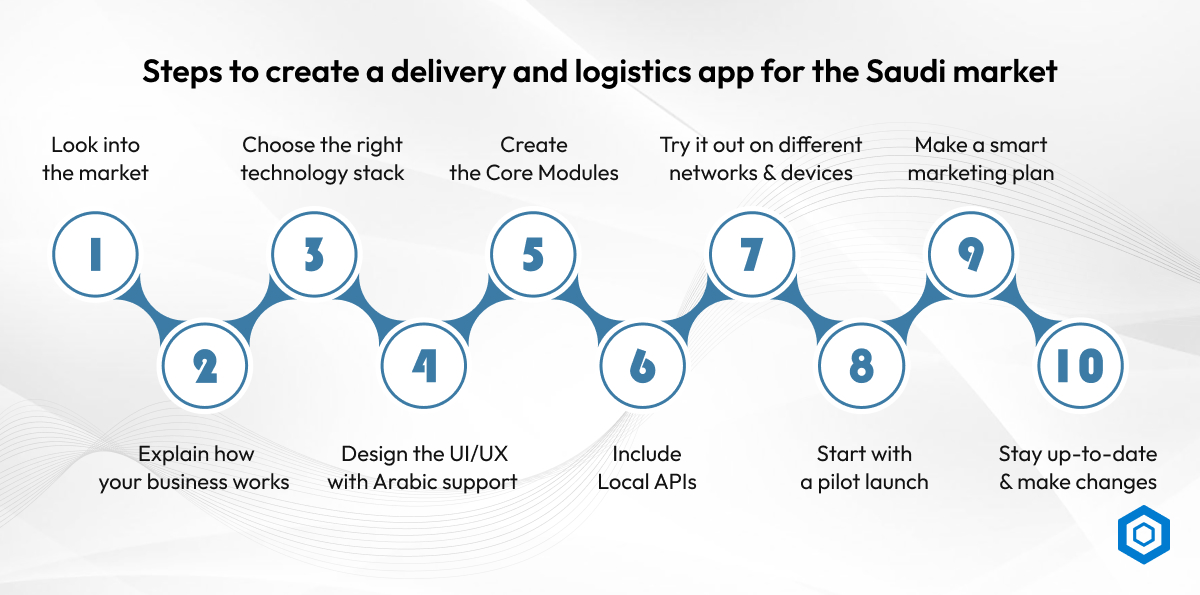
Building a transportation app like Aramex for transportation requires a lot of planning, from doing market research to actually building the app. Every step to create a delivery and logistics app for the Saudi market should be in line with Saudi Arabia’s laws and the needs of its logistics industry.
The price of making a logistics app like Aramex in Saudi Arabia can vary depending on several things, such as the features, platform, tech stack, and where the development takes place.
The team is located. If you want to plan your budget, you need to know how to break down costs, whether you’re making a full-scale solution or an MVP. Here is a detailed list of costs to develop a logistics app in Saudi Arabia:
1. Basic MVP development costs $20,000–$30,000
A minimum viable product usually has basic features like keeping track of orders, shipments, and users who sign up. The main features of this version make it easier to test the market. If you’re a startup that wants to get into the Saudi transportation market at a fair price, this is a great place to start.
2. Making apps with all the features (from $35,000 to $70,000)
This has useful features like live chat, GPS tracking integration, a built-in Payment gateway for Saudi Arabia, and smart route planning. You will also get an admin panel, an analytics dashboard, and help in more than one language. It’s great for businesses that want to grow in a lot of different places in Saudi Arabia.
3. Custom UI/UX design costs $3,000–$8,000
It’s important to make an interface that works the same way as people in the area. The layout that goes from right to left, the support for Arabic, and the easy navigation all make it easier for users to use.
4. API/Backend Development ($7,000–$15,000)
This includes the code that runs your app and handles everything from managing drivers to processing orders. SMS, mapping, and payments also use third-party API integrations. Logistics apps that get a lot of traffic need backend systems that can grow and are safe.
5. Maintenance and updates ($500–$2,000/month)
After launch, post-launch support includes addressing issues, maintaining the server operational, and providing new features as users increase. Updates make sure that your app works with both new versions of the operating system and fixes for security holes. This plan makes sure that the business will do well for a long time and keeps customers happy.
6. Services and licenses from other companies ($1,000 to $5,000)
You might also have to pay for payment gateways and compliance certifications, in addition to cloud storage, SMS gateways, and Google Maps.
Build a transportation app like Aramex in Saudi Arabia by understanding and following local market rules. Customising each step for Saudi users is necessary, from GPS tracking integration to allowing regional payment gateways.
If they hire the top Transportation app development company in Saudi Arabia to make their logistics apps, startups and businesses in Saudi Arabia can create apps that are reliable, scalable, and support Vision 2030.
If you want to keep better track of your customers or speed up shipping, now is the best time to invest in the Saudi Arabia transportation sector. Do You Need Expert Help? Get in touch with our team at Codeflash Infotech, the best logistics app development company in Saudi Arabia.
The right transportation app development company can help businesses create scalable, secure logistics apps that meet Saudi market rules—and support Vision 2030. But what about the restaurant sector? Take inspiration from Talabat’s Latest Business & Revenue Model—a blueprint for MENA food delivery success: