
22 APRIL
The SaaS sector is growing rapidly, and revenue worldwide is expected to reach USD 390.46 billion in 2025. This revenue will demonstrate an annual growth rate of 19.38%, resulting in a market value of USD 793.10 billion by 2029.
To put it simply and technically, a software-as-a-service (SaaS)-based application is a solution that runs exclusively over the Internet, eliminating the need for complicated hardware maintenance and installations. The SaaS applications are hosted on the provider’s server, so security, accessibility, and performance are easily managed.
Thus, this revolutionary concept frees businesses from IT management, offering unparalleled simplicity and scalability, key features of cloud computing technologies like Platform as a Service (PaaS) and Infrastructure as a Service (IaaS). Unlike PaaS and IaaS, which focus on platform provisioning and infrastructure, SaaS providers in Singapore deliver complete software solutions on a pay-as-you-go model, making software acquisition more accessible and cost-effective for SMEs.
To understand it better, consider SaaS a trusted bank that protects customer privacy while offering secure and reliable services on a large scale. As customers rely on banks for different financial transactions, SMEs can use SaaS for different organizational functions, such as customer relationship management, email communication, and enterprise resource planning software.
Here are some reasons why SMEs in Singapore should go for SaaS:
Thanks to cloud computing, which supports SaaS, SMEs can more easily access software solutions with just a few clicks. This implies that software can be accessed from any device by using the internet alone. Hence, SMEs can access their business emails or files anytime, day or night, anywhere.
Cloud computing also makes it easy for SMEs to integrate their systems with other hardware and software on the network.
Singapore’s SMEs that do not undergo digital transformation risk falling behind the competition and facing several challenges. For example, they may become less flexible and agile, resulting in difficulty responding to shifting market needs. Most SMEs do not have a dedicated IT member for security purposes.
Thus, they are vulnerable to data breaches and cyberattacks. SaaS-based applications can help, as they have built-in security features to help SMEs protect their data. With the rise in cybersecurity threats, SMEs in Singapore that fail to implement strong security measures are at risk of cyberattacks and data breaches.
Power outages, natural disasters, and other interruptions are expensive. SMEs in Singapore that depend on physical infrastructure are also more vulnerable to disruption from unanticipated events or natural catastrophes if they do not have sufficient backup plans. Companies that don’t adopt digital transformation may find drawing in and keeping consumers challenging, resulting in decreased sales and cash flow.
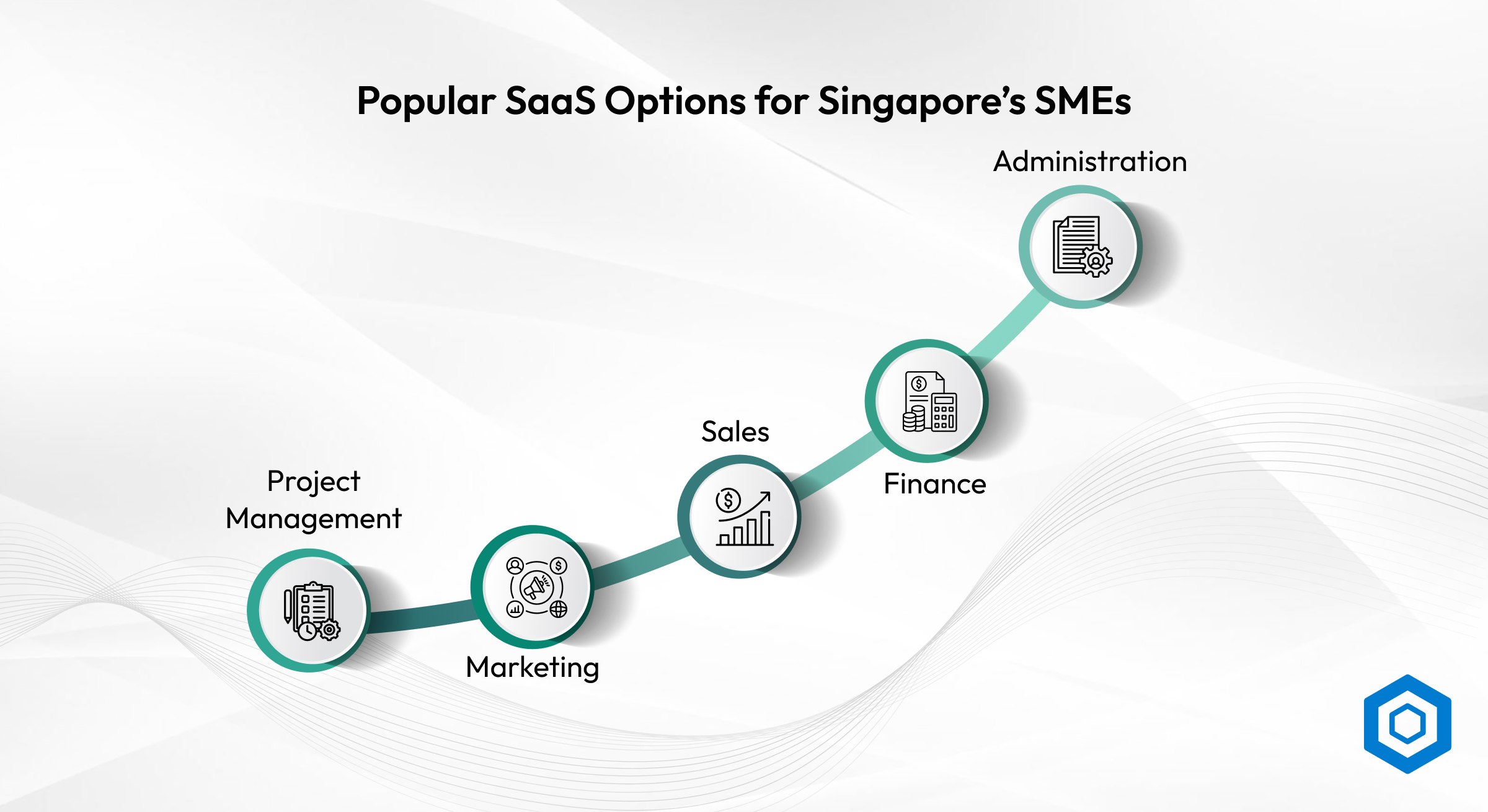
Here are some popular SaaS options that SMEs can adopt in Singapore for growth and success:
The Infocomm Media Development Authority governs services and cloud computing. It has created standards, including TR62:2018 recommendations for cloud failure event response and SS584:2020, the first cloud security standard in the world.
The Singaporean Monetary Authority regulates financial firms’ use of cloud services. Additionally, Singapore has a Personal Data Protection Act that regulates how private companies, including any SaaS provider in Singapore, gather, use, and disclose personal data. The Personal Data Protection Commission’s brief guide for enterprises contains additional information on this topic.
SaaS is needed to transform Singapore’s digital space and is here to stay. Many companies, including SMEs, have already implemented SaaS-based products. In addition to the one listed above, you can also have a SaaS app developed per your needs using a SaaS application development guide by a reputable provider in Singapore.