

13 JUNE
Speed, efficiency, and how the app is experienced by its users are most important in mobile app development. React Native provides a solution that allows apps to be built using both native and cross-platform approaches. Since it has the backing of Facebook and many developers, React Native makes app development fast and ensures good performance. Still, similar to other technologies, it has its challenges as well. React Native is the 2nd most used cross-platform mobile app development framework, with over 13% market share.
The React Native benefits and limitations will be discussed in this article to enable you to make with knowledge before beginning your path of app development.
React Native is an open-source framework built using JavaScript and React. With React Native, developers can make apps for both iOS and Android using the same set of code. While hybrid apps use web technologies inside containers, React Native uses native APIs to style the app, helping it stay compatible with the operating system.
Explore our latest work in cross-platform app development in our React Native portfolio.
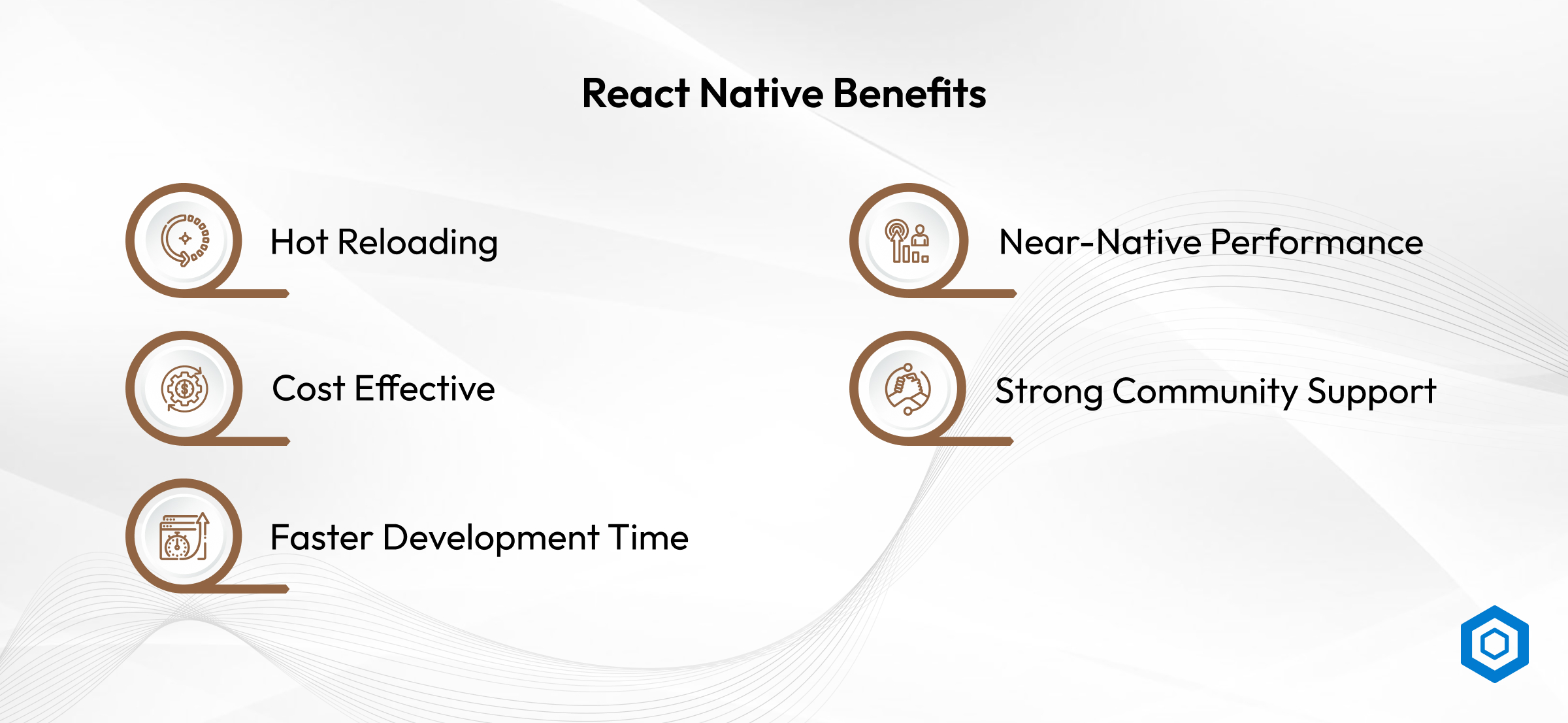
React Native Benefits
Near-Native Performance
React Native apps are almost as speedy and responsive as native apps when they use the right native components.
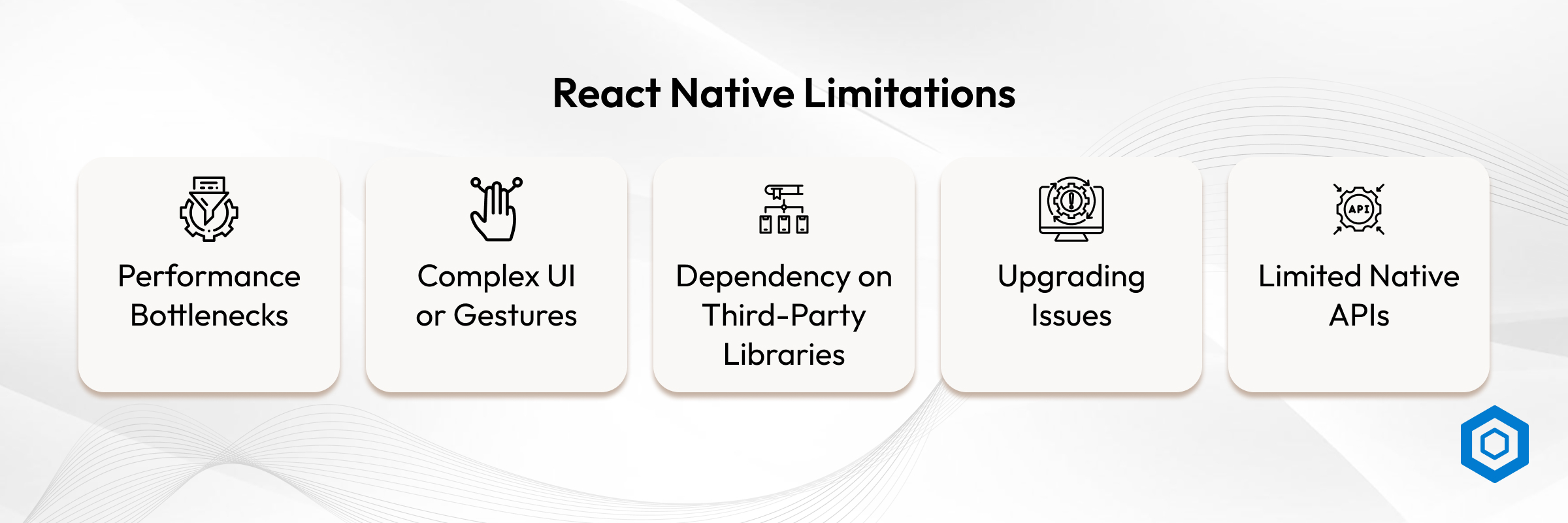
Upgrading Issues
Referring to React Native changes, some updates may cause problems, and not every time does it work out cleanly to use the new one.
React Native is best suited for MVPs, business apps, social media sites, and projects where the need for fast development matters the most and performance demands are modest. It makes it possible for both startups and enterprises to launch features fast and revise them based on the comments from their users.
Have questions or need a quote? Email us
Avoid React Native when building apps that:
Developing the app as a hybrid or a full native app could be a better approach here.
React Native is best suited for MVPs, business apps, social media sites, and projects where the need for fast development matters the most and performance demands are modest. It makes it possible for both startups and enterprises to launch features fast and revise them based on the comments from their users.
Have questions or need a quote? Email us
When to Avoid React Native
Avoid React Native when building apps that:
Developing the app as a hybrid or a full native app could be a better approach here.
React Native is growing in popularity in the field of mobile development for several good reasons. Since it makes development faster, less expensive, and almost identical to native apps, many companies have chosen React Native. However, understanding the React Native Benefits & Limitations is just as important as appreciating its strengths. You should work to make your project fit within the capabilities of the framework.
Be sure to check your app’s needs for speed, high degrees of complexity, and how it might grow in the future before deciding on React Native. By making proper plans upfront, you can reduce the amount of time and risk involved over the project’s life.
Ready to build your next mobile app? Contact our React Native experts today to discuss your project and get a free consultation.

Not all. React Native performs well for apps that need moderate performance but likely won’t be best for apps with advanced features or high graphics needs.
You can start with small parts of the native app and gradually work your way to React Native. Using a hybrid approach, many companies strive to prevent any future risks.
Practicing good coding habits in React Native, for example, HTTPS, secure storage, and continuous auditing of third-party elements, can keep your apps safe.
There is an estimated 30–40% reduction in costs thanks to using code repeatedly and a reduced team size.
Check if the agency or developers have a track record, new testimonials from clients, and a good portfolio to demonstrate their results. Look for a partner who is familiar with your business and technology requirements.