

27 SEPTEMBER
The success stories of e-commerce giants like Amazon and eBay highlight the immense potential and profitability of the marketplace concept. These companies have revolutionized the way we buy and sell, making it possible for anyone, anywhere in the world, to engage in commerce with just a few clicks.
However, in 2024, the question arises: How do you establish a profitable marketplace?
In this article, we provide a comprehensive, step-by-step guide to launching a successful marketplace. Our experts will explore various iterations of the marketplace concept, delve into the Top Marketplace Business Models, and provide insights on building a thriving marketplace.
Current market trends indicate a promising future for online shopping. The number of consumers who prefer to shop online continues to grow, and there is no sign of this trend slowing down. According to a 2021 Statista report, global retail e-commerce sales reached approximately 5.2 trillion dollars. This figure is projected to rise by 56% over the next few years, reaching around 8.1 trillion dollars by 2026. This growth clearly demonstrates the increasing popularity and acceptance of online shopping among consumers.
This trend underscores the significance and potential financial rewards of launching a marketplace in 2024. As more people turn to online shopping, there is a vast and expanding customer base that can be tapped into. Additionally, the success of existing marketplaces shows that consumers are eager to purchase from online platforms that offer a wide range of products, competitive pricing, and a seamless shopping experience. Understanding the Top Marketplace Business Models is crucial for any entrepreneur to capitalize on this trend and build a successful marketplace in the digital landscape.
By focusing on the Top Marketplace Business Models, you can position your marketplace for success, catering to the demands of today’s online shoppers and ensuring a profitable venture in the ever-evolving e-commerce landscape.
Under the marketplace model, a platform acts as a middleman between buyers and sellers to facilitate transactions without having ownership of the goods or services being sold.
This approach allows buyers and sellers to find, evaluate, and buy products from a single central location.
Marketplace models can earn money in various ways, including commission-based revenue models, subscription plans, transaction fees, and advertising.
Successful marketplaces build dynamic ecosystems that utilize network effects and scalability to promote growth, improve consumer choice, and propel ongoing innovation in digital commerce.
To understand the marketplace model in depth, you can read our article, where we have explained Marketplace Business Models, Process & Cost in detail. This comprehensive guide covers everything you need to know about how different marketplace models work, the step-by-step process of setting up a marketplace, and the costs involved in launching and maintaining a successful platform.
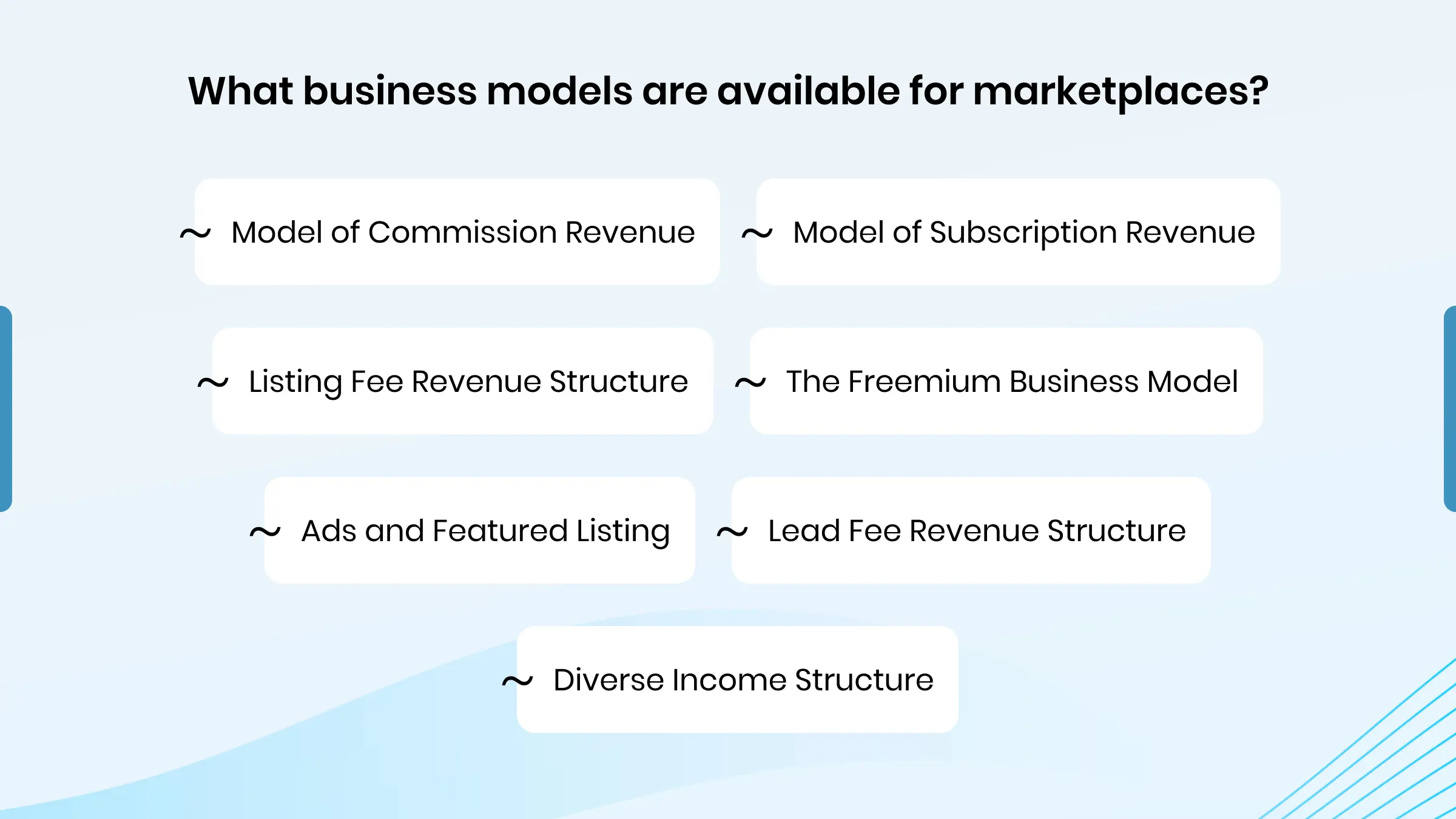
Most importantly, three different marketplace business model options exist: commission-based, subscription-based, and listing fees. If we were to compile a list of the best seven internet marketplace business models now in use, they would be as follows:
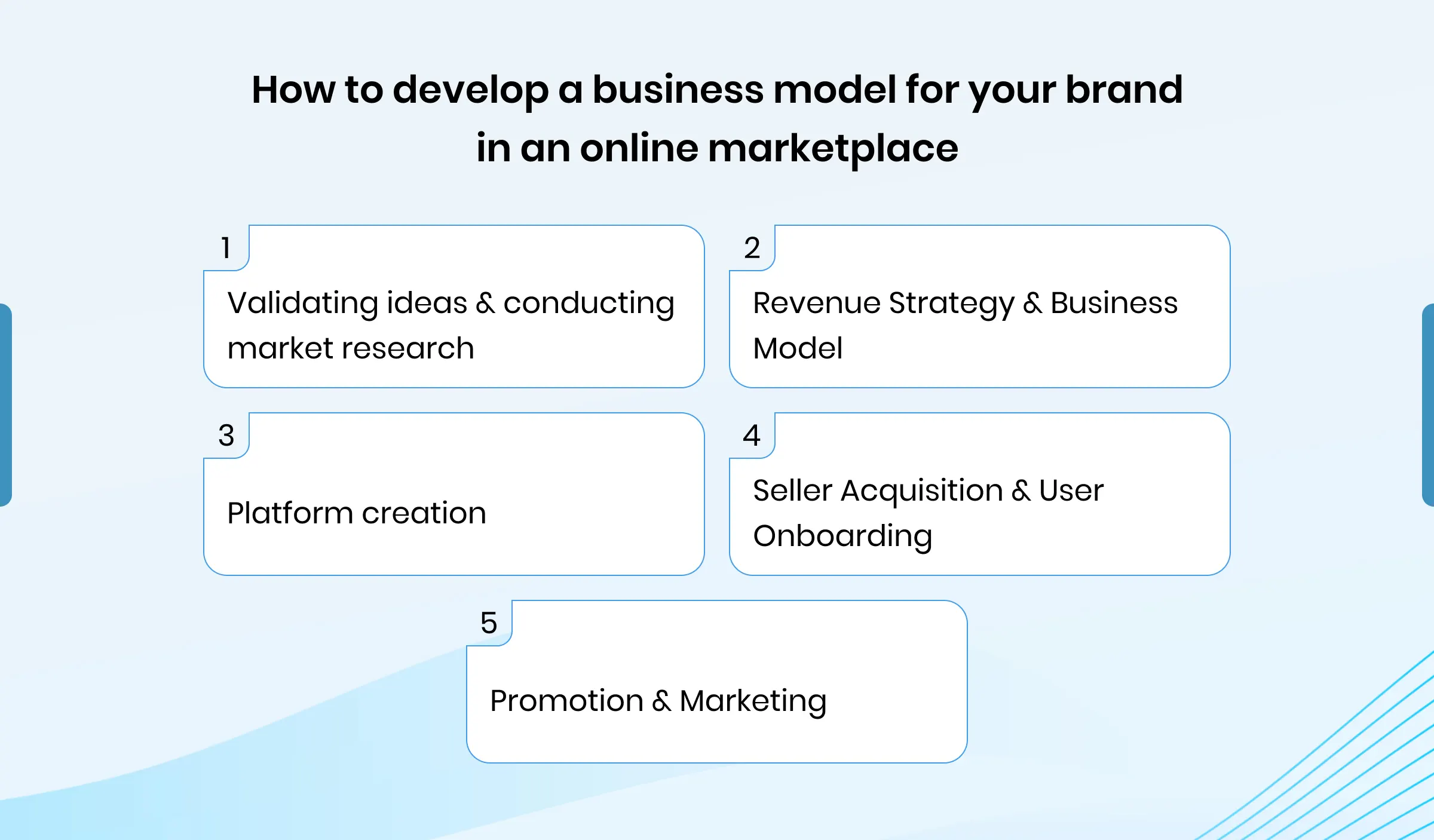
How do you create an online marketplace that attracts different types of shoppers and sellers? Developing a multi-vendor platform is simple if you take the proper measures. Below, we have outlined the procedures to assist you in building a thriving online marketplace.

Establishing a prosperous marketplace in 2024 is a very promising endeavor. The ever-changing digital ecosystem presents fresh chances for flexible and creative organizations. With its potential for scalability, accessibility, and affordability, the marketplace model offers businesses and entrepreneurs a unique opportunity to capitalize on the expanding e-commerce industry.
Nevertheless, a marketplace’s success cannot be assured by its mere introduction. It needs to be executed precisely, with careful planning and a strategic approach. Every stage is critical to a marketplace’s success, from conducting in-depth market research to establishing a niche, selecting the best platform, hiring reliable sellers, putting a solid marketing plan into action, and offering top-notch customer support.
Furthermore, the adventure only finishes when the marketplace opens. To remain competitive and relevant in the ever-evolving e-commerce space, the marketplace must be constantly monitored, updated, and improved in response to user feedback and market trends.
If you have the correct strategy and tools, your marketplace can succeed in the cutthroat world of e-commerce. It could develop into a platform that benefits buyers and sellers and increases revenue. It may make a name for itself and establish itself as a top option for online buying in the congested e-commerce market.
Establishing a prosperous marketplace in 2024 is a complex undertaking and a thrilling chance. It’s a chance to build a platform that facilitates transactions, links buyers and sellers, and supports the digital economy. With the correct direction and assistance, like that offered by Codeflash Infotech, this project has the potential to become a fulfilling and prosperous undertaking.
So, let’s look forward to the thrilling adventure of establishing a thriving marketplace in 2024! Let’s accept the difficulties, use the present, and fully utilize the digital era.