

06 MAY
Mobile app development is increasing at a rapid pace as our society continues to embrace digital technology. The rising trend of progressive web apps (PWA’s) in technology shows growing strength in transforming this field. PWA’s merges web-based applications and native mobile apps by delivering a speedy platform that serves content reliably, while bringing the same level of engagement as platform-native applications, independent of traditional mandatory app stores. The future of mobile development solutions depends on PWA technology, as its relevance continues to rise. This article examines in detail how PWA technology will transform mobile application interfaces, alongside broader mobile development trends.
Progressive Web Apps are web applications that behave like native mobile apps. PWA’s are developed from standard web building tools, including HTML, CSS, and JavaScript, and execute inside browser programs to deliver an application-quality interface to users. The global progressive web apps market size was estimated at USD 1.46 billion in 2023 and is projected to grow at a CAGR of 31.1% from 2024 to 2030. These web applications feature offline capabilities, provide push notifications, and connect to hardware like regular applications. This makes them ideal for those firms that are looking forward to developing cross-application that run on both ios and Android platforms without the need for different codes.
Need personalised advice on PWA mobile apps? Email Our Team
Multiple advantages transform PWA’s into a leading mobile application architecture of the future. The primary benefit of PWA’s consists of lowering the obstacles that users encounter when downloading applications. The browser enables users to instantly convert PWA’s into home screen applications by bypassing typical app store requirements. Users become more involved and more likely to transform through the simplified access method.
The PWA update and maintenance system requires less effort from developers. Web developers can deploy new updates to web applications automatically, ensuring that end users acquire the most up-to-date version without delays from store review processes. This significant benefit makes future-ready mobile solutions easier to develop for businesses competing in speed-sensitive markets.
The future of PWA-powered mobile apps is fueled by the rising demand for cost-effective, scalable, and flexible solutions. Tech giants like Google, Microsoft, and Twitter are already leveraging PWAs to showcase their potential across various platforms. With advancements in browser technology, PWAs are expected to support even more robust features such as file system access, enhanced camera integration, and background data synchronization — pushing the boundaries of what’s possible in mobile app development.
As businesses continue prioritizing seamless cross-device experiences, PWAs are emerging as a powerful tool in cross-platform app development. They offer a unified and consistent user journey across smartphones, tablets, and desktops. By enabling compatibility with multiple operating systems through a single codebase, PWAs are setting new standards in cross-platform efficiency — a principle well understood by today’s ReactJS development experts focused on delivering responsive, future-ready solutions.
See how we’ve transformed businesses with progressive web apps. View Our Portfolio
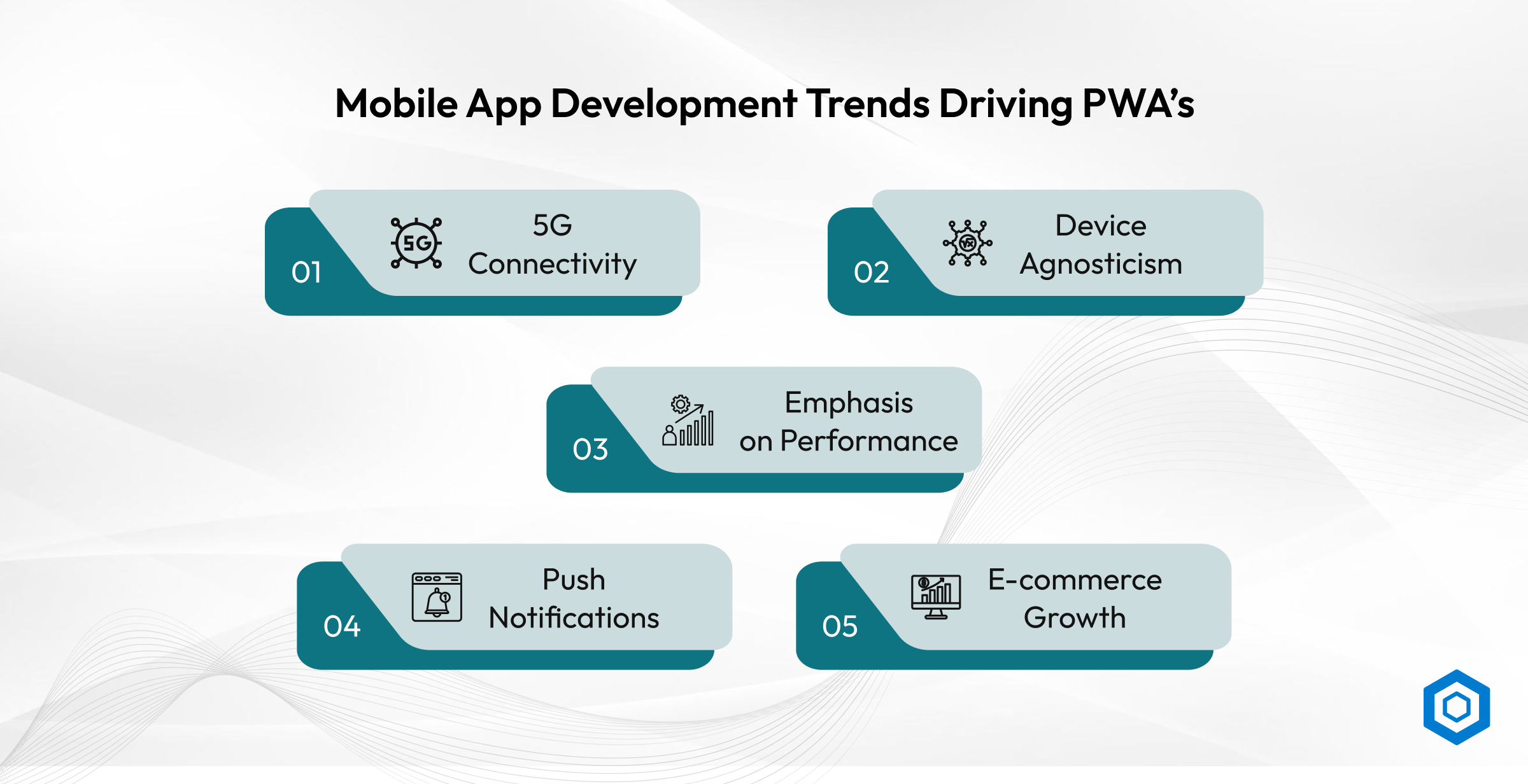
Several mobile app development trends are supporting the rise of PWA’s:
PWA’s will become the fundamental mobile strategy selection because user trends indicate they are developing into preferred mobile solutions.
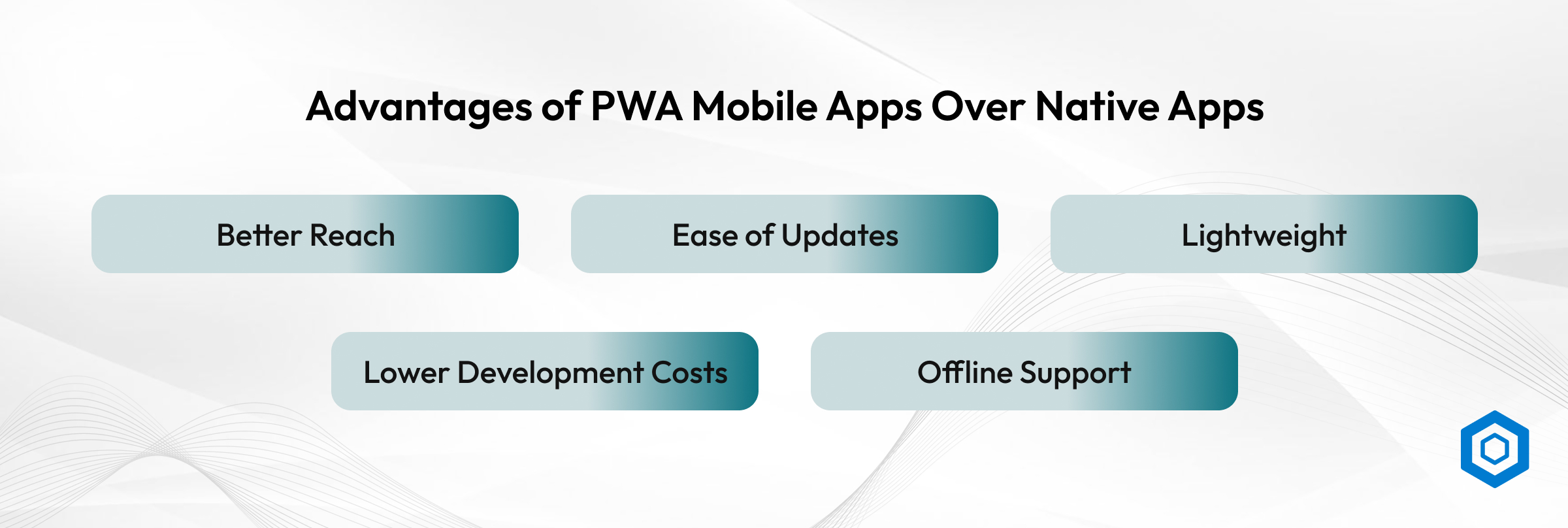
While native apps have their place, PWA’s offer unique benefits:
In a world where user attention spans are short and storage space is precious, these advantages make a strong case for the future of PWA mobile apps.
PWA’s face various obstacles in their path to further development. The ability to use Bluetooth and NFC within PWA’s remains restricted by some mobile devices. The support for PWA on Android devices is solid, but ios, under Apple’s control, maintains tight restrictions. The extensive adoption of PWA technology depends on resolving limitations in ios device compatibility for push notification features and background syncing capabilities.
Security concerns are another issue. The requirement for HTTPS encryption serves as a mandatory safety measure for PWA’s, although some developers either underestimate its importance or fail to implement it adequately. Standardisation, along with education about PWA’s, will become vital when they replace traditional mobile applications on a large scale.
Future-oriented business mobile solution planning should include PWA’s as a core part of digital strategy development. The primary goal of PWA’s is to provide users with more options and an improved quality of experience, rather than replacing existing apps completely. Businesses that create Progressive Web Applications (PWA’s) alongside native mobile apps achieve dual benefits through broad user base coverage.
Developers need to master PWA competencies, specifically concerning service workers and caching methods, as well as push notification management and responsive design capabilities. To maximise PWA benefits, organisations must adjust their promotional strategies so that users can easily understand both the website install feature and the availability of content offline.
Future PWA technology sets its course toward developing accessible web-based solutions that promote seamless speed performance. The adoption of human-centric values by businesses will lead to a significant expansion of mobile app innovation through lightweight, progressive web apps.
Ready to build future-ready mobile solutions? Contact Us Today to start your PWA journey!

PWA’s operates based on a single codebase, which powers their functionality across Android, ios, and desktop platforms. Businesses requiring cost-effective cross-platform app development should opt for PWA, as their standardised coding structure enables efficient development and ensures a uniform user experience.