09 MAY
The Internet of Things is therefore the interconnectivity of the physical world through the use of devices internet such as sensors and machines. To the businesses these are some of the most important assets one can think of. They distinguish it as a tool that enables the making of better decisions, the cutting of costs, and the improvement of the customer experience.
The concept of IoT in business has ceased to be the case for innovative companies that are in the IT industry only. Manufacturing, agriculture and food industry, healthcare, the supply chain, and retailing are some of the industries that are already adopting IoT to have sustainable and efficient operations. It is a reality that the capacity to guide, maintain, and enhance the organization’s assets through networked technologies is revolutionizing the commercial world.
Have Questions About IoT for Your Business? Email our experts
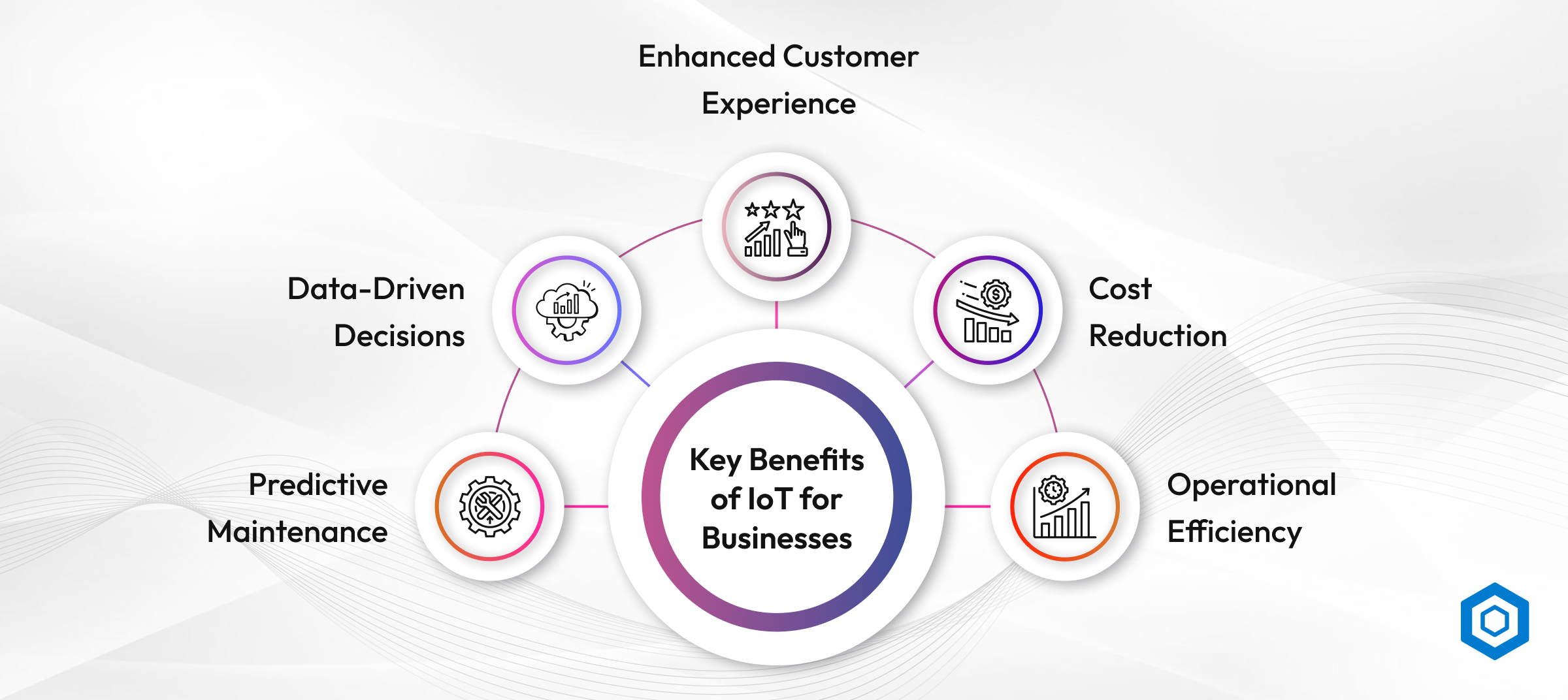
The benefits of IoT for businesses span multiple dimensions:
Modern IoT enterprise solutions integrate software, hardware, cloud platforms, and AI to deliver comprehensive digital ecosystems. These solutions assist the businesses in capturing information from various interfaces and getting the insights derived from them.
For instance, a smart manufacturing setup may involve connected machinery, AI-based quality checks, and cloud dashboards that visualize factory performance in real time. Similarly, retail businesses use IoT sensors to track footfall, shelf availability, and customer behavior patterns.
The availability of the internet and mobile devices to the masses has almost made the concept and implementation of the IoT application services very easy. On this regards, the custom built applications make it possible for companies to access its assets and monitor various KPIs and be able to receive alerts regardless of time and Geographic location.
Check out our portfolio and discover how we’ve helped businesses like yours go smart and scalable.
Undoubtedly, one of the most popular implementations of IoT is associated with logistics, IoT in the supply chain. Real-time assets tracking, temperature control for perishable commodities and goods, optimization of routes in logistics are some of the few ways that IoT is revolutionizing logistics.
With proper GPS navigation and telematics, fleet managers are able to monitor the performance of the cars and the behavior of the drivers in real time with the aim of minimizing on fuel usage as well as the consideration of safety. Currently, many warehouses incorporate uses IoT sensors to help with this ensuring that one did not overstock or run out of stock.
By getting a single window view of the supply chain, they are regularly capable of making a number of beneficial changes to their operations, such as increasing agility and decreasing lead time along with the customer’s satisfaction levels.
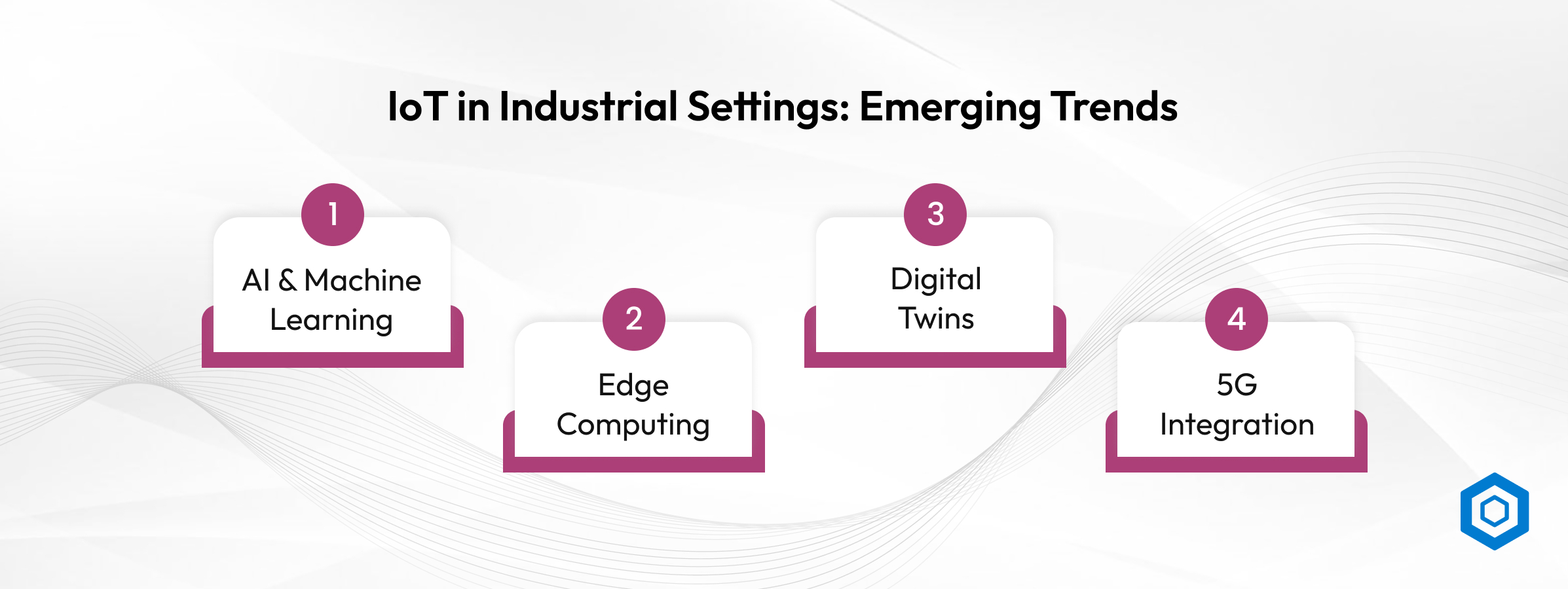
The analysis of IoT industry trends shows the increased usage rate of IoT all around the industrial sphere. Known as Industrial IoT or IIoT this application is applied to smart factories, shop floors, predictive maintenance or digital twins.
Some emerging trends in IoT industrial settings include:
These trends are setting the stage for a more autonomous, self-regulating industrial ecosystem.
At the center of every effective deployment of the IoT is high software power. IoT app development services are critical in developing good interfaces to manage the devices and new applications to support the abbreviation IoT.
App development for IoT includes:
IoT app developers help in making raw data useful to the company through a mobile app for managing and monitoring field equipment or a web-platform for data analyzing.
These examples highlight how IoT in business is not limited to one sector but is a universal enabler.
While the opportunities are vast, businesses also face challenges such as:
However, these challenges are increasingly being addressed with more robust security protocols, open APIs, and affordable cloud-based platforms.
The future holds significant benefits of IoT for businesses, as it evolves to become increasingly intelligent, automated, and connected. With enterprises accelerating their digital transformation efforts, IoT is set to play a pivotal role as the backbone of smart operations and customer-focused business models. According to Deloitte, predictive maintenance can lower maintenance expenses by up to 10% and improve uptime by 20%. By integrating IoT, companies can unlock efficiencies, enhance decision-making, and deliver more tailored experiences, shaping a smarter and more connected business world.
Businesses that invest early in scalable IoT enterprise solutions and agile IoT app development services will not only survive the competition—they will lead it. By leveraging the full potential of IoT, enterprises can become more resilient, efficient, and responsive to the needs of a fast-changing market.
Contact us today to explore custom IoT enterprise solutions tailored for your industry.