
02 MAY
The increased technological advancement has recently made the integration of artificial intelligence (AI) in software production more popular. For code, AI is not just an enhancer, a bonus, or a new feature; it is a revolution in software development. That is why it becomes imperative for software developers, businesses, and even educators to start embracing the new changes that AI is driving in software development. Revenue in the AI Development Tool Software market is projected to reach US$9.76bn in 2025. ·But what does this imply for the development of coding?
AI is no longer a futuristic concept; it’s already here, transforming how we build and manage software. New applications of AI coding tools can now write, review, test, and even debug codes as part of traditional coding jobs. This is making development faster, more efficient, and, to some extent, more accessible.
Advanced algorithms and uses of natural language processing make it possible for an AI to embrace coding, from comprehension to generation. These include GitHub Copilot, Tabnine, and OpenAI Codex, among others, creating and suggesting code collaborations in real-time alongside providing fixes for errors, allowing developers to concentrate on problem-solving rather than spending their time and energy on syntax.
Let’s talk code! Reach out via email to discuss your next AI-powered software solution.
Today, it is possible to speak about the expertise of automated coding as the basis of AI-driven development. Some can produce basic sample codes by pointing and clicking; they can also recommend the ‘best course of actions’ or even entire application templates, just like meeting a particular programmer’s prompt. This does not mean that human coders are done away with, but it positively supports their work.
For example, an AI tool can propose an option for the RESTful API structure or generate the code for unit test execution since they spend considerable time and effort on these tasks. It can be more beneficial if they focus on more sophisticated choices. This way, there is a faster way of delivering good-quality products to the market, thus doing so in less time and less cost.
Modern AI coding tools are not just for completing the code but also serve many other essential functions. They are familiar with code context, style, and architecture. These learn from millions of code repositories and then use that knowledge to help the developers in run time. This would be a dream come true if a system were built that not only provides auto code write-ups but also can guide you on the right logic path and simultaneously show you the issue before it appears in your code.
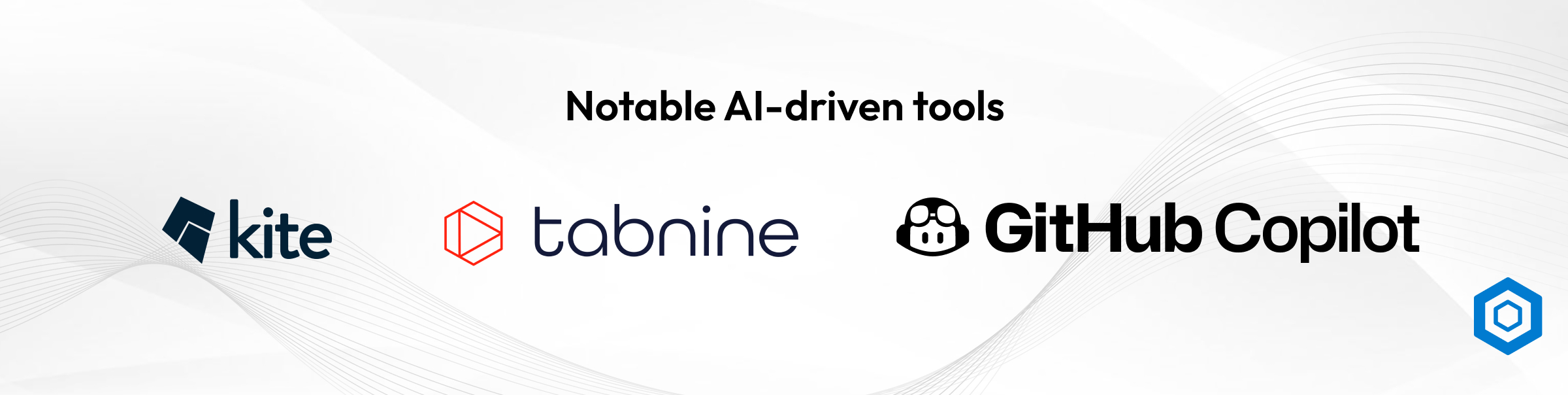
Some notable AI-driven tools include:
These tools are relatively new and commonly used by the latest software developers.
Many people believe that AI technology plans to take over programmers’ jobs. In reality, AI for programmers is more about collaboration than competition. Developers design all software products, yet AI functions as an advanced collaboration tool, providing both speed and accuracy benefits.
Junior developers gain the advantages of practicing faster and smarter, whereas senior engineers can address more abstract and critical issues. AI can also assist in maintaining coding quality by basing patterns on patterns developed to correct any shortcoming at the early developmental stage.
As we look ahead, the future of software development lies in a human-machine partnership. This means that AI will not replace developers but work with them and, in fact, extend their abilities and possibilities of building better, more scalable, and secure apps.
Here’s what the future might look like:
This synergy means faster development cycles, reduced operational costs, and better software quality overall.
Check out our portfolio to see how we’ve helped clients with cutting-edge AI development.
Even though the advantages are numerous, it should be noted that using AI in software development programs has its own unique problems. This means that AI models can be taught with prejudices from the data provided to them by humans. For instance, if a codebase utilized for training has been subjected to insecure patterns or predate techniques, the AI tools may develop or imitate them.
Moreover, AI-written code needs to be checked and analyzed carefully. However, there is always the case where the use of such suggestions provided by the AI may lead to subtle defaults or introduce new security holes. In the future of AI, effective validation schemas and essential norms regarding them should also be implemented.
As for the accountability of all AI use, their Tunisian counterparts will have to become involved in further ensuring it: checking the code, refining the results, or being responsible for the decisions made at the stages of the project’s development.

AI-driven software development represents the newest technological frontier, which is impossible to deny. Software development through artificial intelligence technology brings efficiency to code creation and develops team potential while opening new possibilities. The adoption of automation in coding and intelligent tools has changed developer roles, but their essential value cannot be replaced.
Programmers must now dedicate their efforts to selecting AI system guidance while organizing and coordinating with algorithmic programming help. Software development’s path forward requires human-knowledge collaboration with machine intelligence to produce enhanced, expedited, and astute software solutions.
Have a project in mind? Contact us now and discover how AI-driven development can accelerate your software journey.